Senior designer on Calendly's first dedicated growth team: the cross-functional pod responsible for activation, conversion, and the pricing & packaging migration that came with the company's shift to multi-tier SaaS.
Research a friction point. Design against the finding. Ship in experiment. Read the data. Iterate. Two opportunity spaces anchored everything: activation and conversion.
In 2021, Calendly had millions of individual users and a growth surface that hadn't kept pace. The product was scaling from a beloved personal tool into something enterprise teams were adopting at scale. Activation, conversion, and monetization all needed serious design attention.
While working on Calendly's new plans and pricing launch, a paywall experiment I ran landed well enough to make the case for a dedicated growth function. The company's first growth team formed shortly after: one PM, a growth engineering pod, a content designer, and me. No inherited playbook. The operating loop: research a friction point → design against the finding → ship in experiment → read the data → iterate. Two opportunity spaces anchored everything: activation and conversion.
Higher activation rate
Across onboarding experiments
Higher conversion rate
Free to paid, across the funnel
ARR at exit
Up from $50M at formation
A selection of experiments that shipped. Each one started with a friction point in the data or a pattern that kept surfacing in research.
We hypothesized that adding illustrations to the setup flow would help new users understand what they were building and increase follow-through to a first meeting.
+4% impact on first meeting booked. Q4 2021.
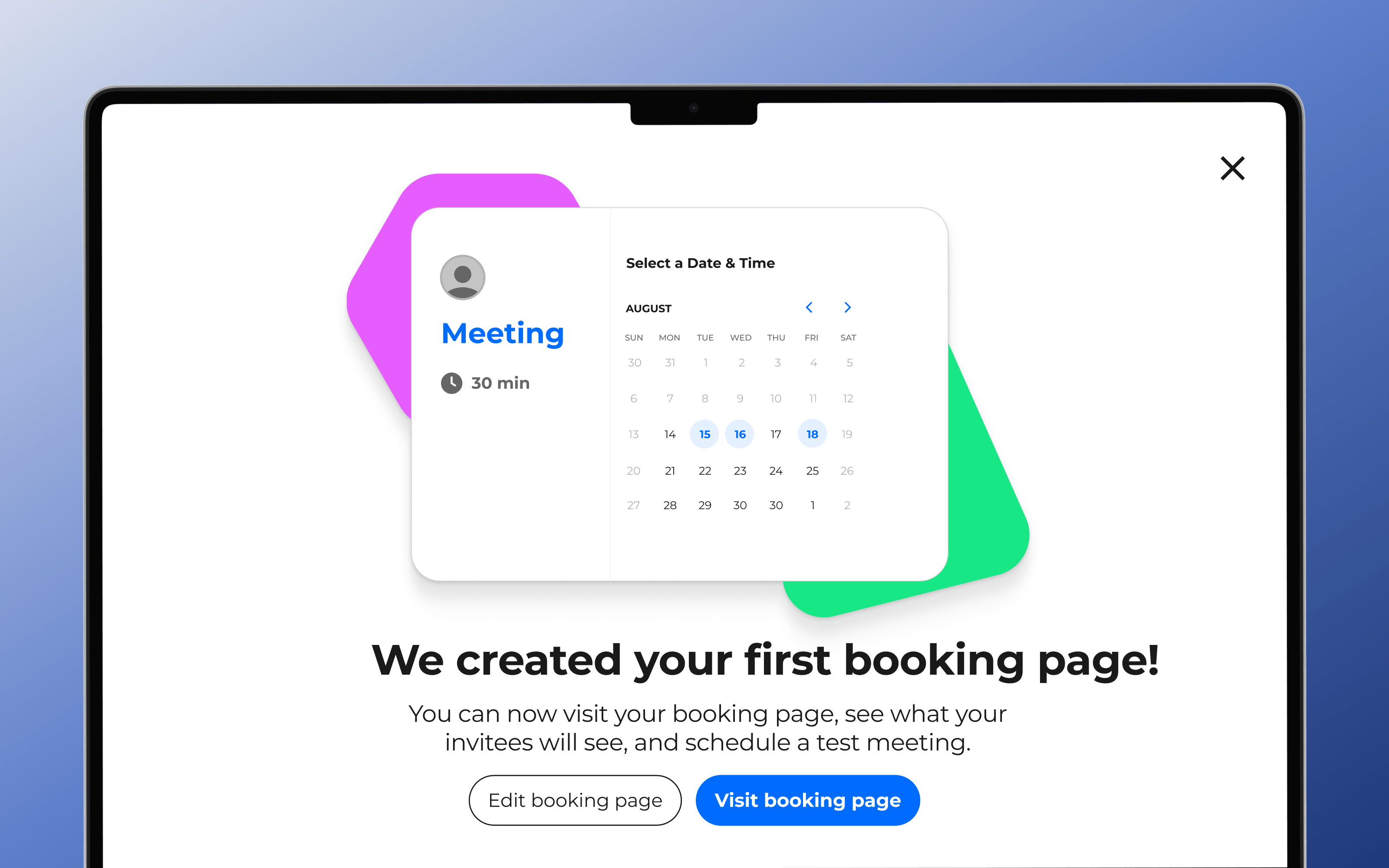
After completing setup, users landed directly on the dashboard with no prompt to act on what they'd just built. The interstitial was designed to close that gap.
+7% lift on 1st actual meeting booked. Q4 2021.
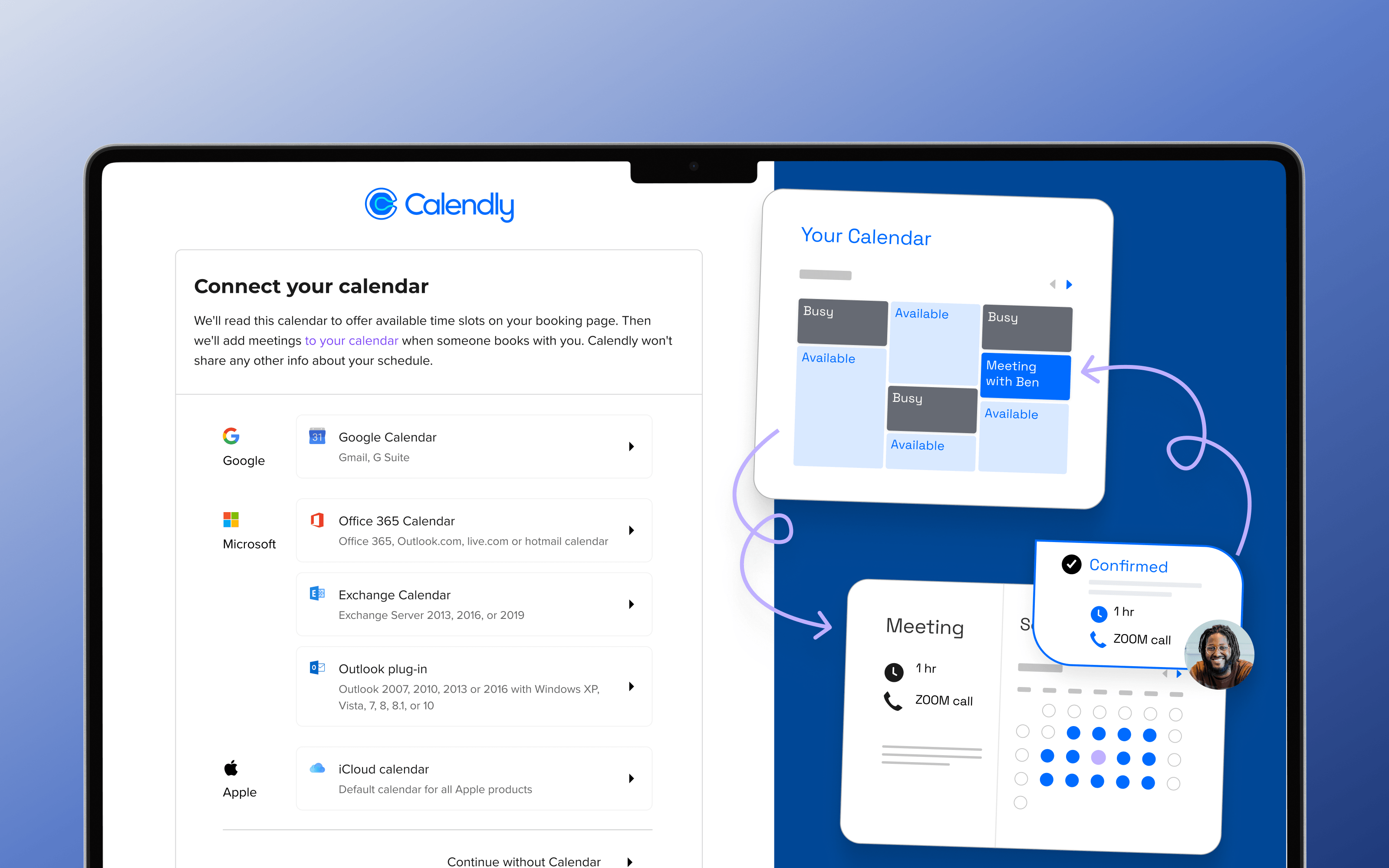
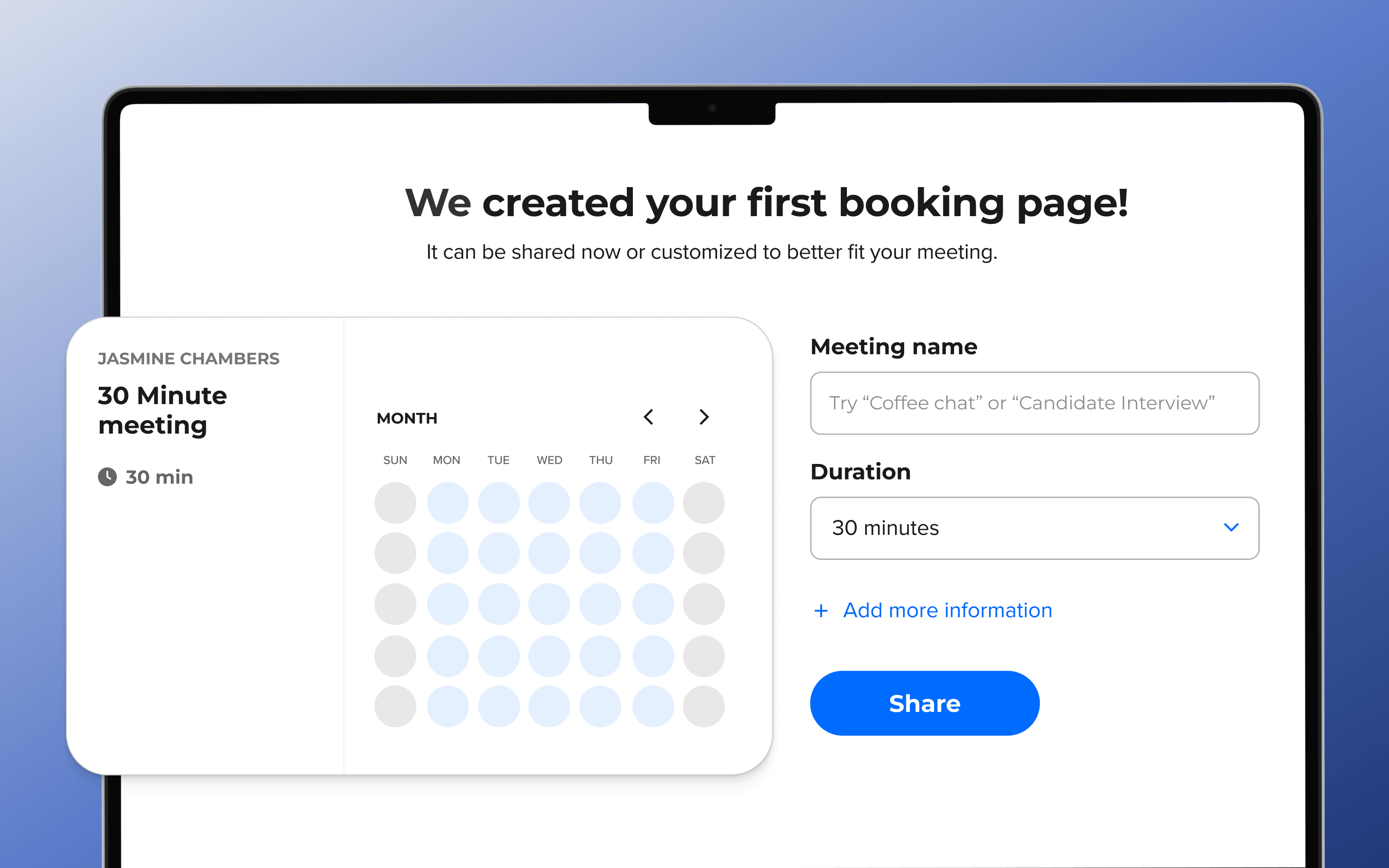
New users completed setup with a generic default event type — no name, no ownership. Prompting an edit immediately after setup could create a stronger early connection to the product.
+18% first meeting edit and +3% first meeting booked. Q2 2022.
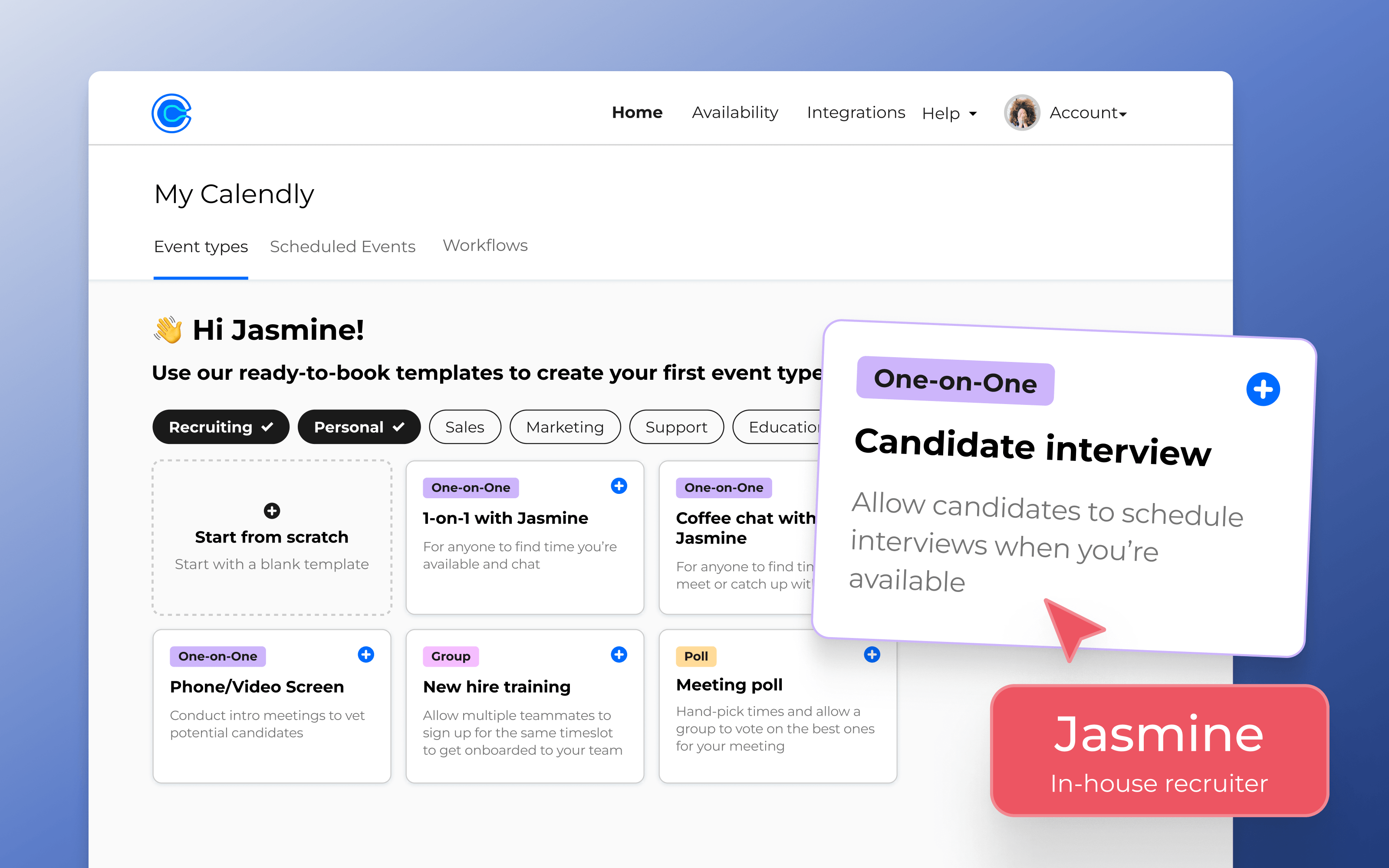
The default event type was identical for every user regardless of the role they selected at signup. A recruiter and a founder shouldn't start with the same thing.
~2% average increase in 1st actual meeting booked for all users, and ~5% for Sales, Marketing, Freelance, and Consulting roles.
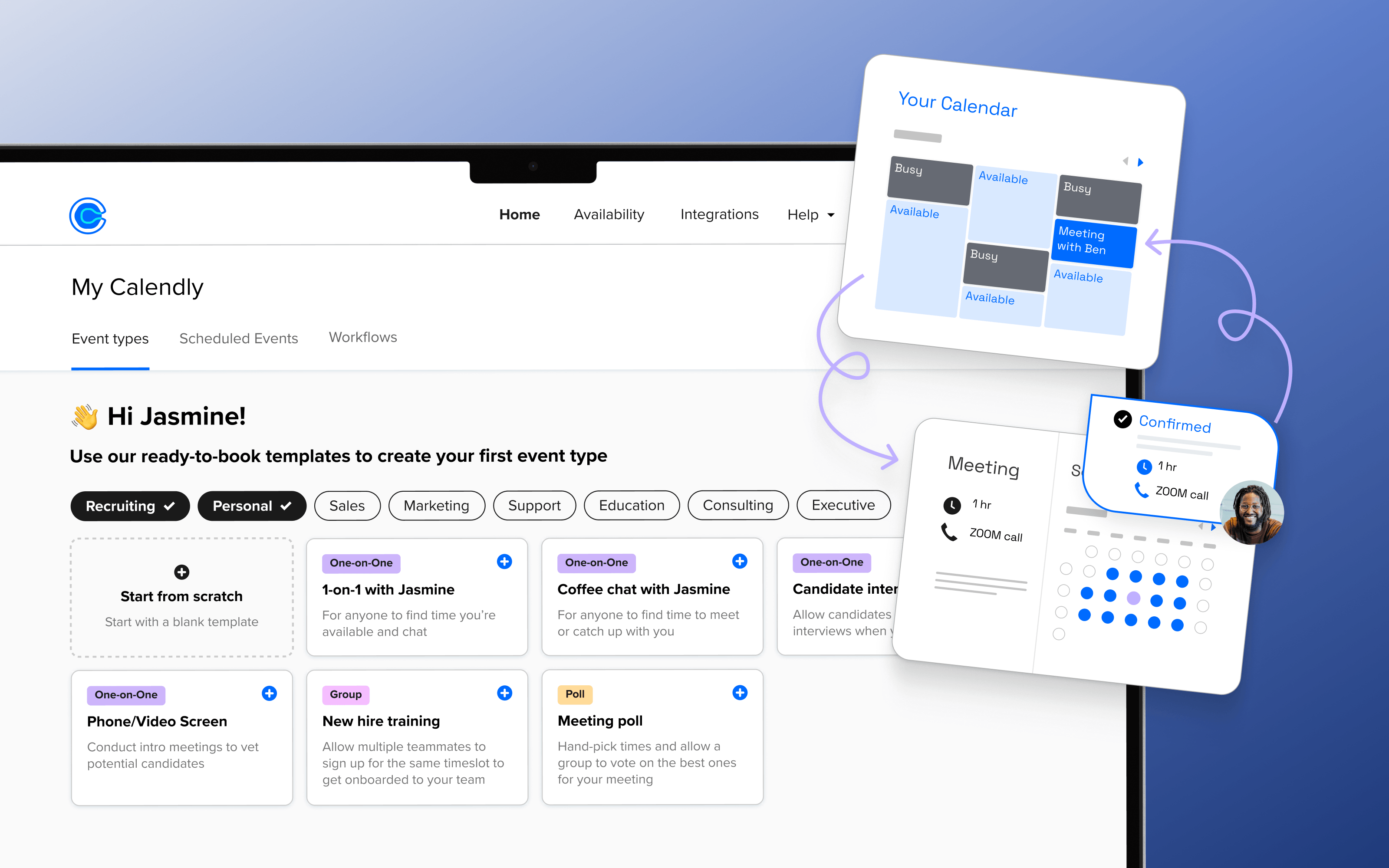
Without a path to a second event type, users had a shallow relationship with the product. Templates on the homepage gave them something to reach for.
+7.1% second ET booked within 14 days for all users, +13% for new users. Advanced scheduling usage up +20%. Key learning: new users don't know what event types are — existing users already do.
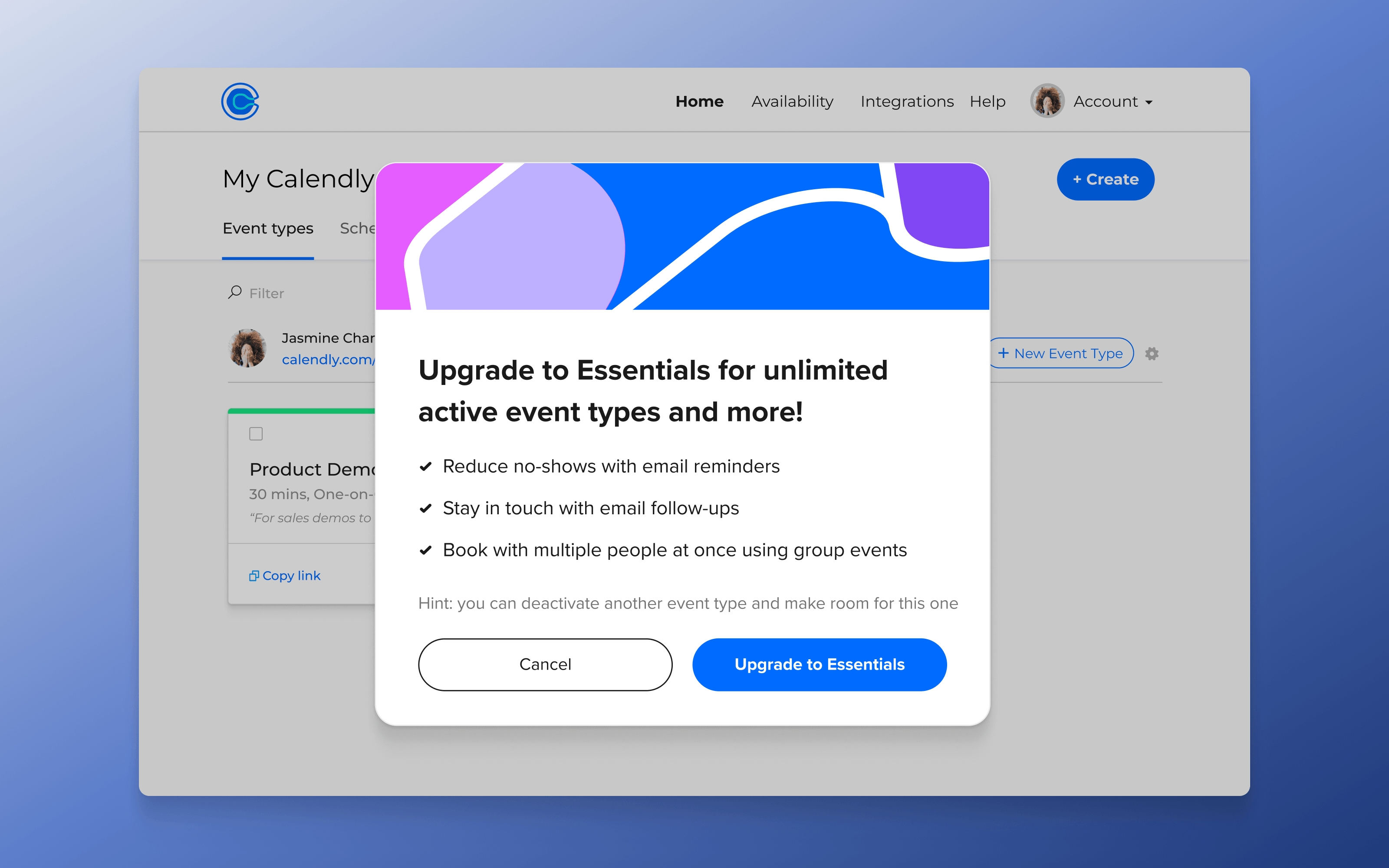
When users hit the paywall for a second event type, the generic upgrade prompt showed nothing about what they'd unlock. Specificity should convert better.
+7.36% conversion rate at 95% statistical significance.
+4% impact on first meeting booked.
+7% lift on 1st actual meeting booked.
+18% first meeting edit and +3% first meeting booked.
~2% for all users, ~5% for Sales, Marketing, Freelance, and Consulting.
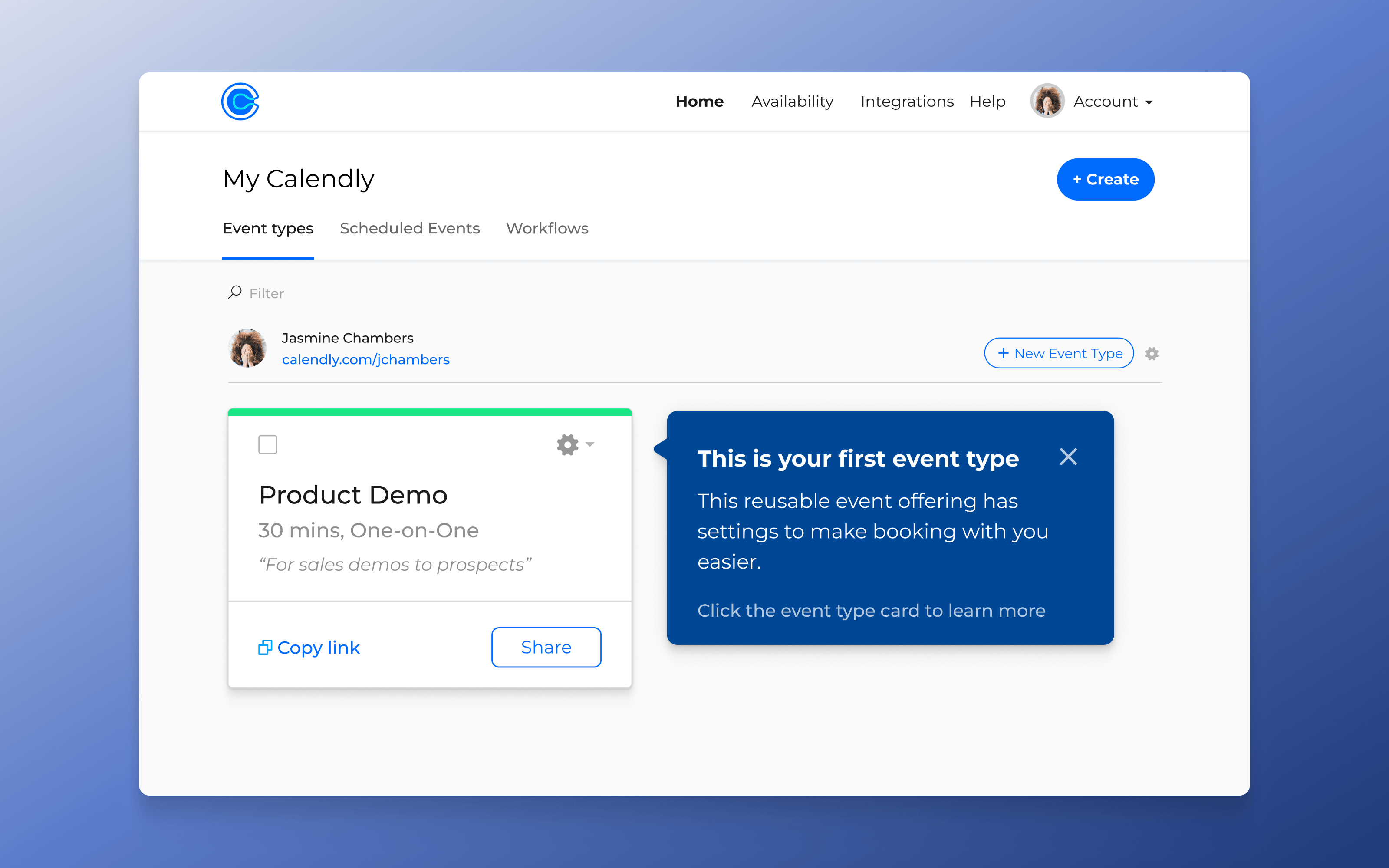
+7.1% second ET booked for all users. +13% for new users. Advanced scheduling up +20%.
+7.36% conversion at 95% significance. ARR per exposed user still +2.46%.