Point.me built the category-defining award-flight search using miles and points. I joined as embedded design lead for the company's two biggest 2025 product bets: launching Hotels as a credible second vertical alongside flights, and rebuilding flight search results around how members actually use a points-driven product.
Approach
Both bets shared a shape. Define the strategy with PM and the founders. Translate it into a tight design spec a small team could hold. Defend the design against the easy version (an OTA clone, a faster spinner) until the harder version was buildable. Ship it lean, then iterate against the redemption funnel.
Embedded Design Lead, contractor
Jul 2024, ongoing
PM (Kristen Petrenko, Jan Bisaga), Eng leads, Growth, Brand
Award flight search · Hotels · Travel cards
Travel · Loyalty · Points-and-miles redemption
Hotels MVP & GTM · Search results overhaul · Progressive search · Deal indicators
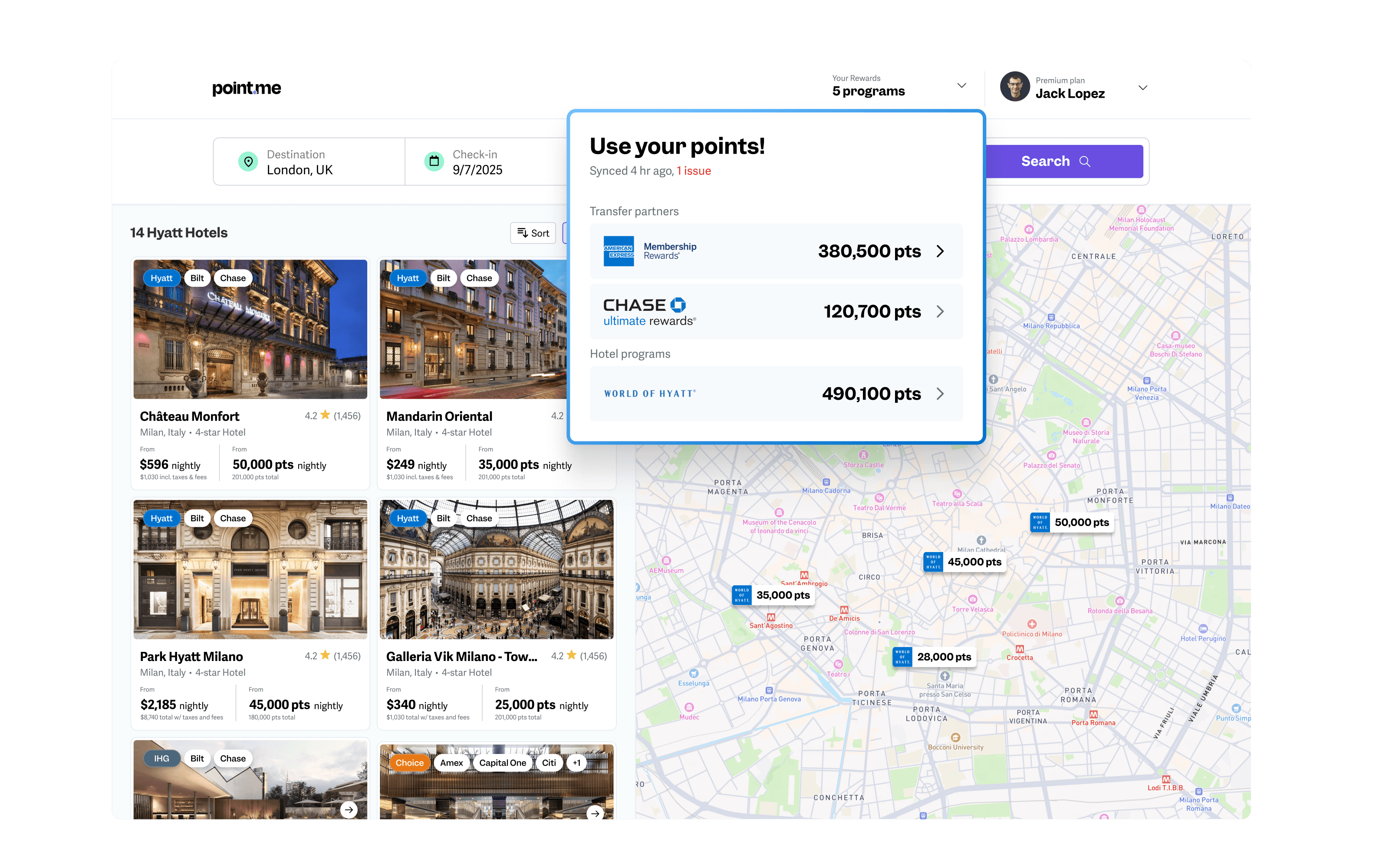
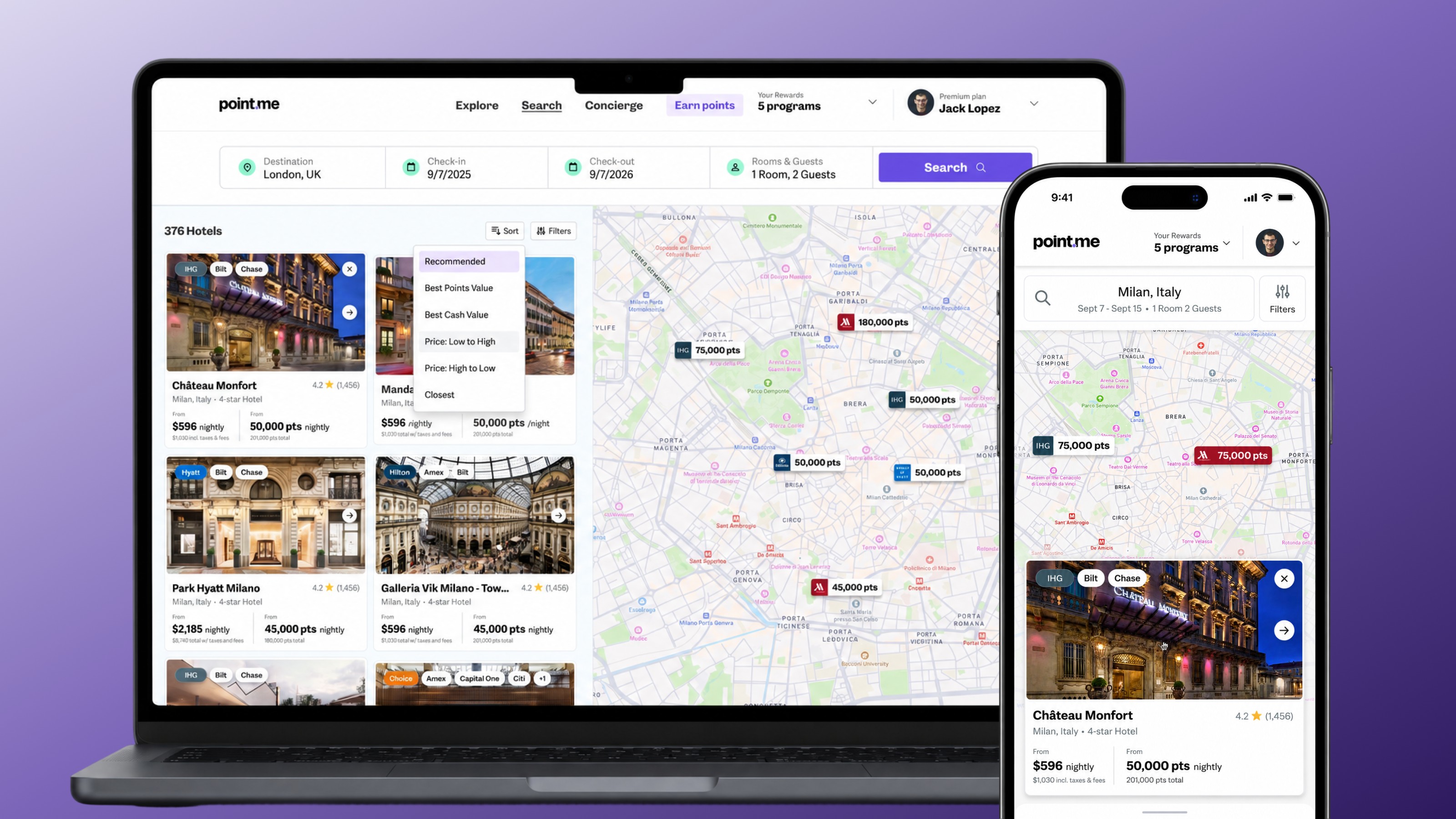
80% of Point.me's flight bookers also book a hotel. The strategic move was obvious; the design problem wasn't. The easy version made Point.me into another OTA. The right version had to defend a position that Booking.com and Expedia structurally can't: showing members which redemption is actually worth their points, in cash or in points, transparently.
I designed Hotels as a 3-tier progressive journey (logged-out, logged-in free, paid) so the same product could simultaneously drive top-of-funnel acquisition (free, public hotel inspiration), conversion (member-only rates, gated by login), and retention (alerts and deeper search for paid). Each tier shows more value, on purpose.
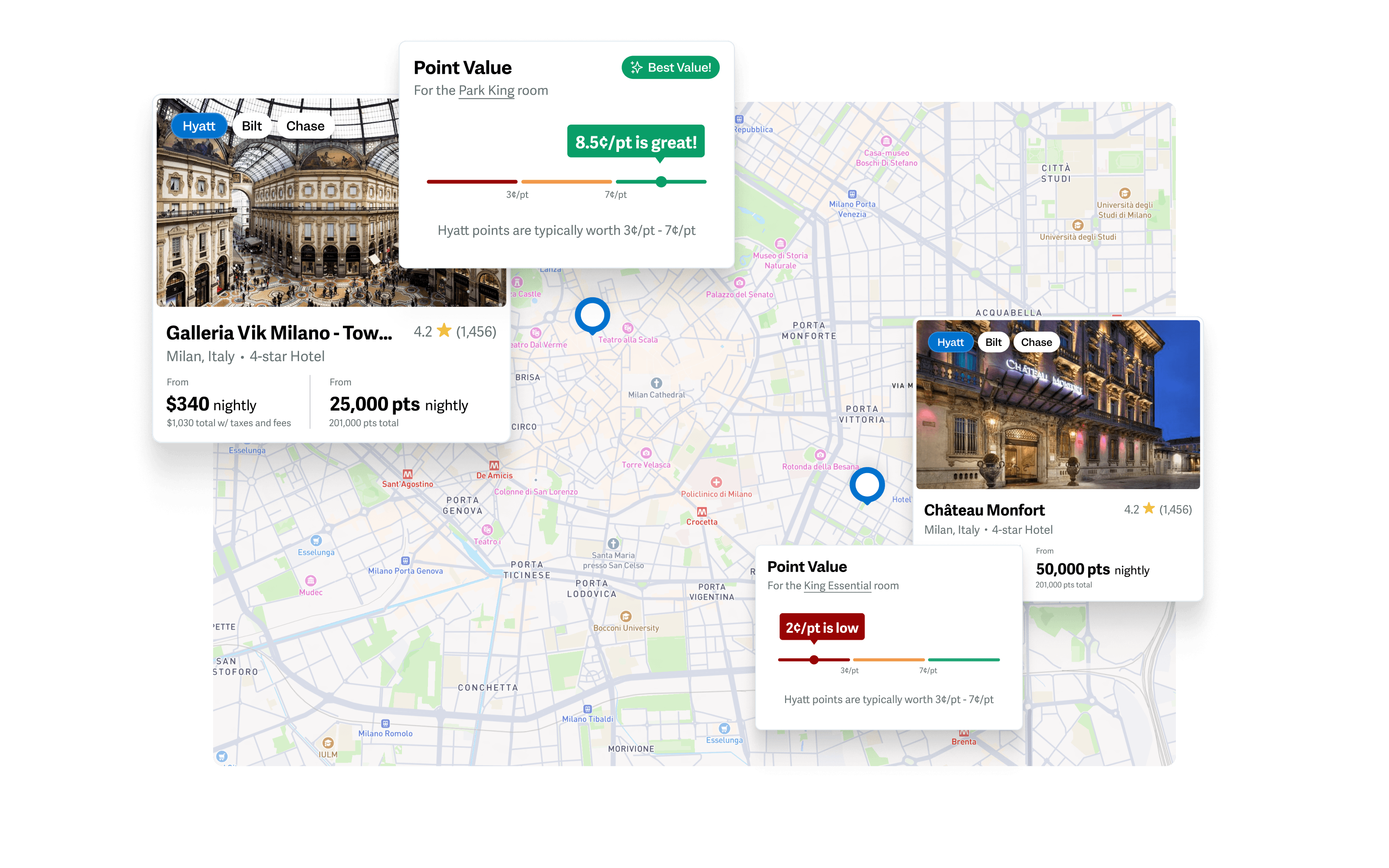
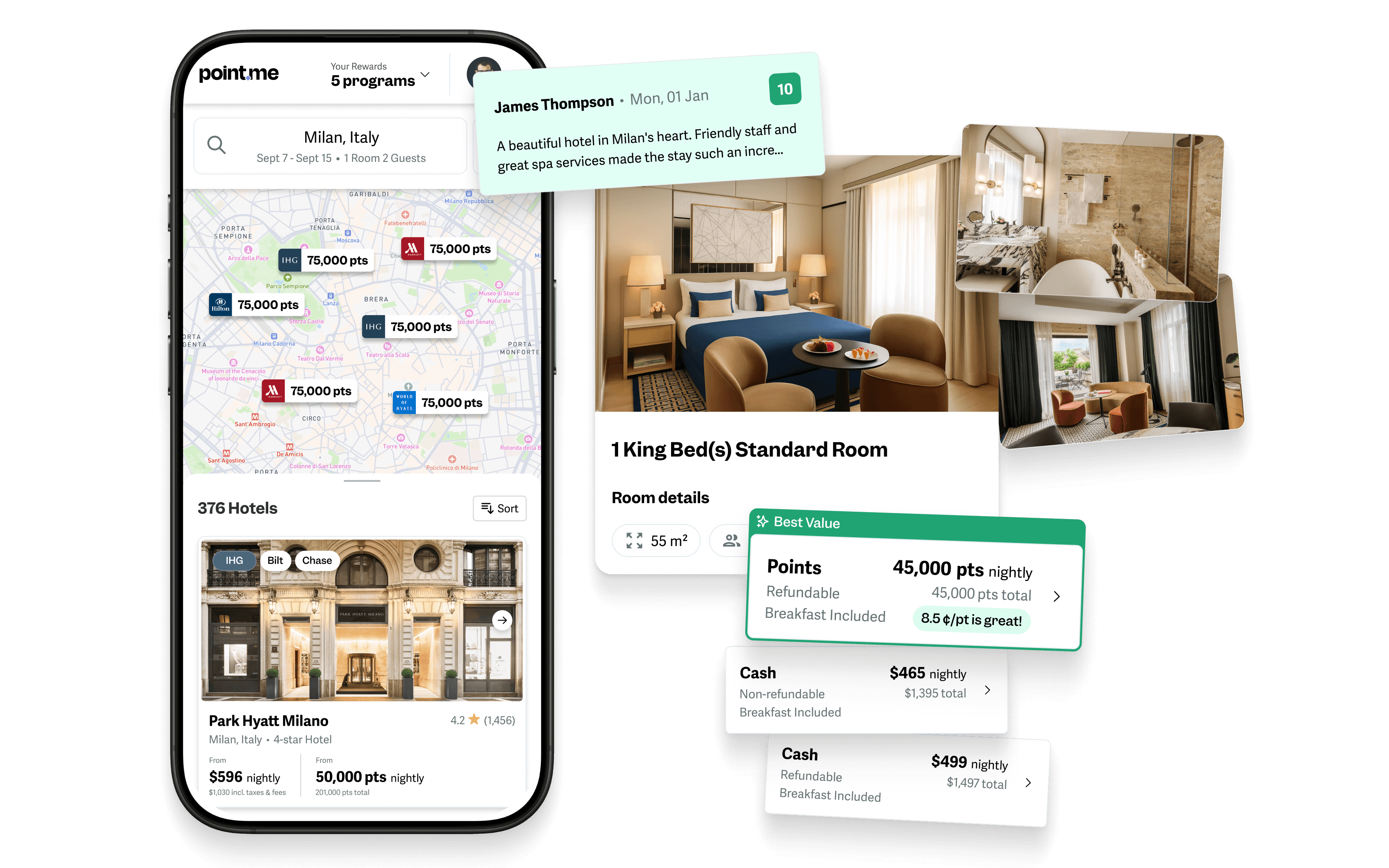
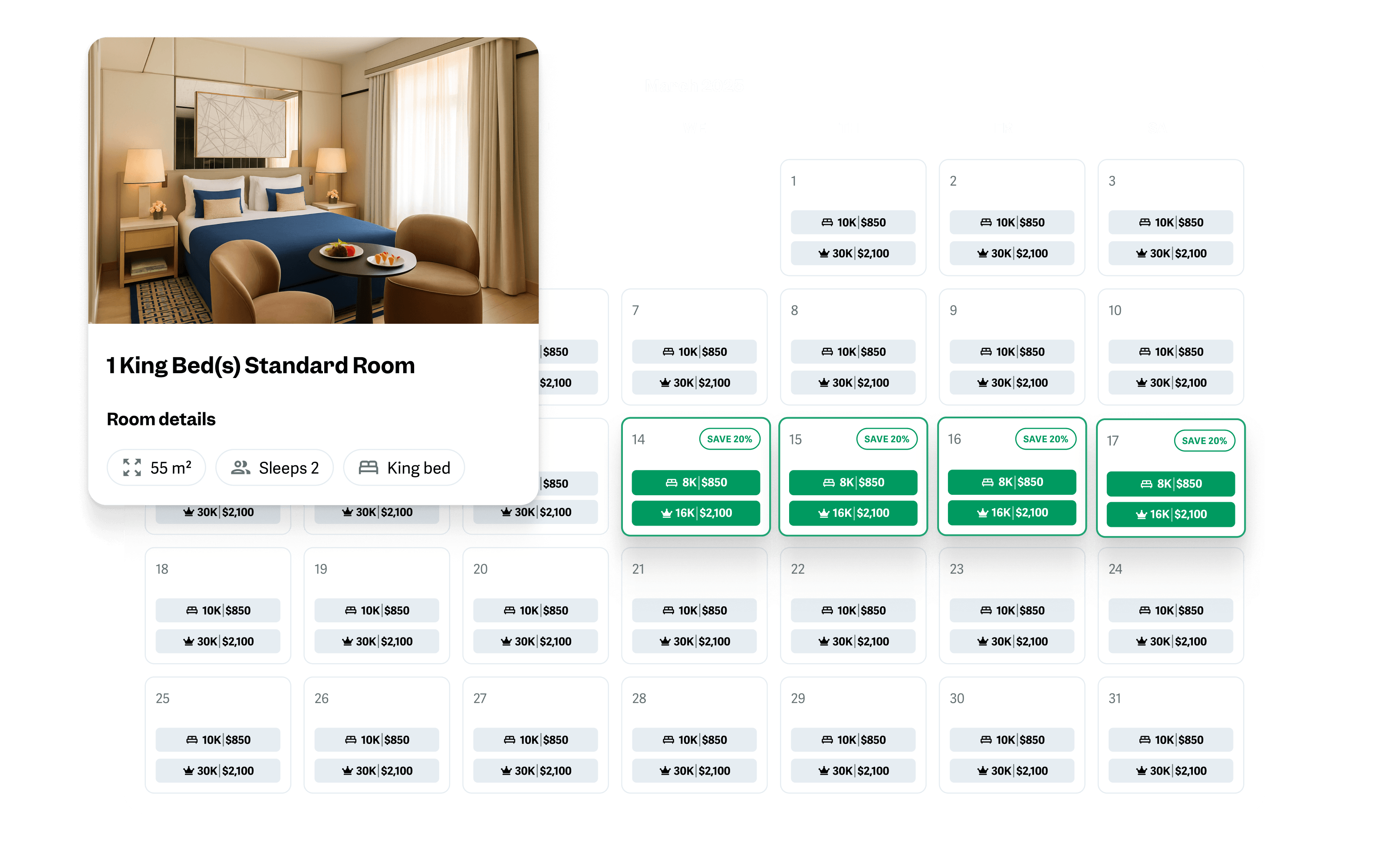
Visual deal quality marks (Excellent / Good / Fair) anchored to cents-per-point, the language Point.me's members already use to evaluate a redemption. Cash and points appear side-by-side with a clear visual hierarchy that doesn't pretend they're the same thing.
The MVP shipped inside the existing Travel Cards / Explore surface, not on the home page. That sequencing was the design call: Hotels needed real users before it earned home-page real estate. We learned about hotel pricing, user behavior, and partner appetite without disrupting the highest-traffic surface in the product.
The framing positioned Point.me to negotiate direct partnerships with hotel chains (high-quality bookings, loyalty engagement, lower distribution cost) rather than commodity OTA economics. That's the long bet the design was protecting.
Award flight search worked, but the funnel leaked. Real-time scrapes took long enough to feel slow; 95% of users abandoned between search and the carrier's booking site; and the result row didn't make the differences between cabin classes, transfer options, and deal quality scannable. I led the design rebuild against four levers. perceived performance, conversion, relevance, competitive parity.
A progressive loading model. Cached results render instantly while the real-time search runs in the background. A freshness indicator transitions smoothly from "Last seen 2 days ago" to "LIVE" as fresh data arrives. The perception of speed changed without changing the search engine.
Worked with engineering to define which cache tier serves which user state. Paid users hit source-level cache for accuracy, basic users hit historic cache for breadth, logged-out users see a tease that funnels into account creation.
The result row and detail modal now treat Economy, Premium Economy, Business, and First as parallel booking paths: points required, transfer options, and a deeplink to the carrier site for that specific cabin. Cabin experience info (lay-flat seats, suite layouts, dining) lives in an expandable accordion so the row stays scannable for browsers and rich for buyers.
Transfer options and program suggestions read from the member's wallet, not a generic list. If the member has Chase Ultimate Rewards and 80,000 points, the result surfaces transfer partners and bonus offers that match. The wallet stops being a passive record and becomes an active relevance signal.
The 95% abandonment between search and the carrier's site wasn't a UX gap, it was a structural one. Restructured the funnel so members deeplink directly to the carrier site with full booking context: cabin, dates, passenger count, and a one-click enrollment for the loyalty program if they don't already belong. Removing steps, not coaching.
Both workstreams ran against tight engineering capacity and a small team. The design contribution wasn't only screens. It was the strategic framing that let leadership see why the harder version was worth the time, and the translation work that made it buildable inside the existing search infrastructure.
"The lean version of Hotels was always going to ship. The point of the design was making sure what shipped didn't dead-end the partnership story."